Life After Labor
AI will return us to Tradition.
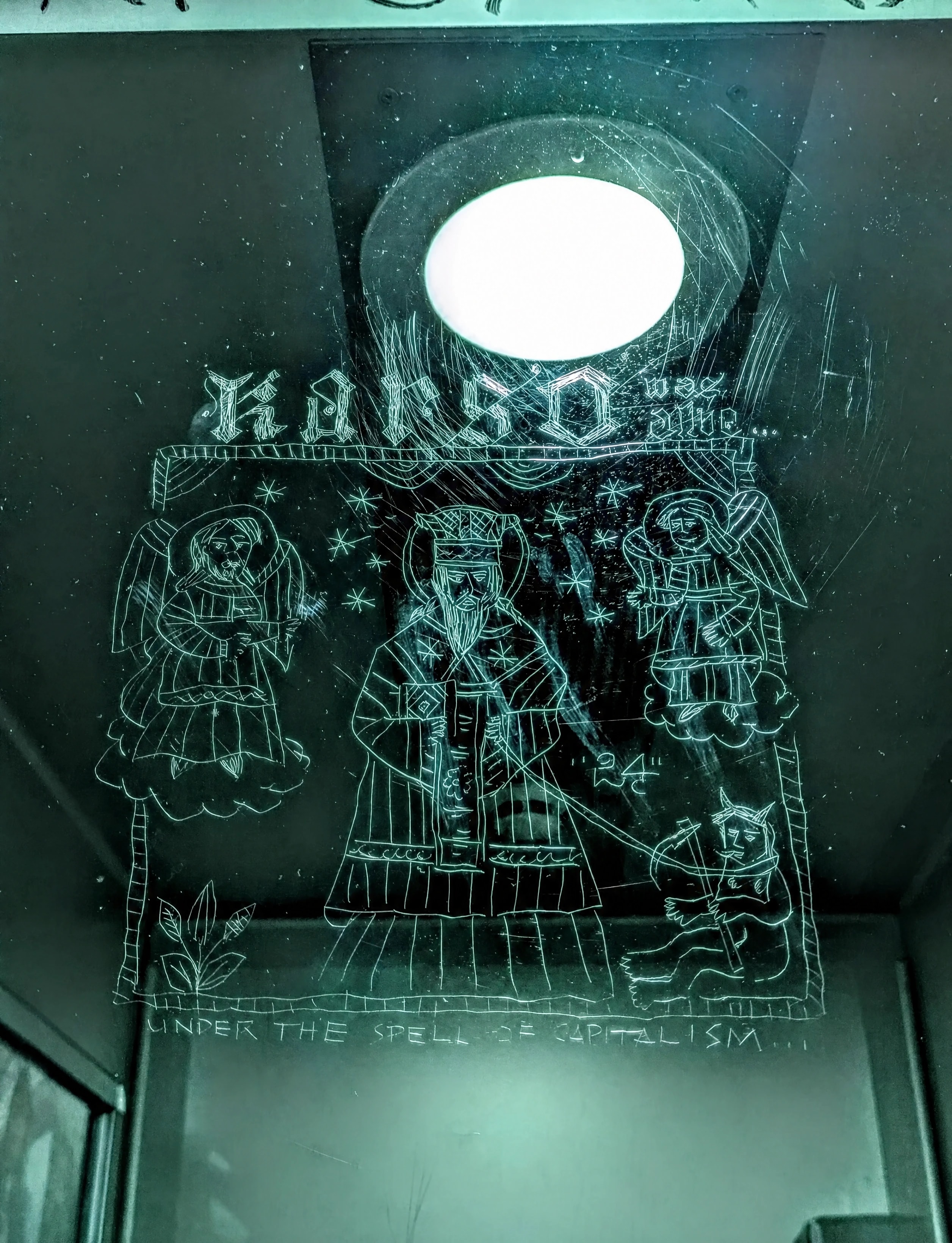
AI is beginning to transform the economy as a cheaper and more effective alternative to human labor. If AI can do our jobs, how will we spend our time? We need to begin thinking about life after labor.
Today, our world revolves around economic production. Our identities are linked to our roles in this process. Our nations are measured in terms of economic output. The modern person is homo economicus: a producer and consumer. As such, our elites have promoted sorting into countries, cities, and communities on the basis of our comparative advantage in some labor function. But society has not always been this way.
Pre-modern societies developed organically. Families grew into tribes, and tribes grew into nations. These social organisms were defined first by shared biology and environment; thus shared moral and aesthetic instincts; thus ways of life attuned to our experience of reality. Given this homogeneity, societies could be governed on the basis of uniform spiritual ideals. Societies can only have one highest end, so the primacy of virtue entails the subordination of economics. The Hindu caste system placed the priest above the merchant; commerce was beneath the samurai; the knights of medieval Europe pursued a path to God through the heroic quest. Tribal life, characterized by moral uniformity, enabled the pursuit of virtue as the orienting force of these societies.
This world was destroyed by the railroad, telegraph, and other technologies that unlocked globalism. Before railroads, production was local. A town made what it needed and occasionally traded with its neighbors. Railroads made it possible to ship goods across continents, unlocking competition for local producers and centralizing production through economies of scale. The telegraph made price information global, and global capital pooled where it could be deployed fastest: cities with deep liquidity and dense talent. Capital attracted talent, talent attracted capital, and the cycle compounded. Multiculturalism – the antithesis of tribal life – is a consequence of economic incentives.
But what if these incentives disappear? In modernity, people traded their ways of life — traditions, languages, rites, myths, gods — for wealth. Technology giveth, technology taketh. AI will eat urban labor markets, consuming the white collar tasks at which it performs best: coding, financial analysis, research, legal work. As these cities' economies vanish, people will be forced to evaluate their future homes on non-economic terms — on whether a community's way of life resonates with their own. We will re-sort into tribes along cultural, religious, and ethnic lines, seeking others who share our instincts for how life should be lived.
Some tribal communities like this already exist: Israel, the Mormons, the Amish. But many new tribes will come into being. Hypothetically, imagine a "Real France." A global community of people who are ethnically French, revere French art, its language, its philosophy, its food, its Catholic heritage, but who have no attachment to the bureaucratic secular state that rules l'Hexagone. This community develops shared norms, shared rituals, and shared governance. Eventually it establishes governance over some physical territory. France as a people and way of life, not merely an economic zone. This is the logical consequence of two forces converging: AI dissolving the economic logic of immigration to countries for their labor-markets, and digital coordination tools that make it possible to build private, capitalized communities.
Praxis is the first Digital Nation, dedicated to a monumental idea, one that has been suppressed for the better part of a century: Rome. Rome is the symbol of the people of the West, and carries within it a concept of heroism as a path to the transcendent. The Roman sought to extend the boundaries of the known world, to impose order on chaos, to build things that would outlast him by millennia. This is the Faustian spirit that Spengler identified as the animating force of Western civilization. The relentless drive to conquer the unknown, the spirit that built cathedrals, split the atom, and made sand think. In a post-labor world, this spirit does not die; it finds its expression through the eternal vocations of exploration, creation, and conquest. Praxis is dedicated to this spirit.
People are concerned that life after labor will be meaningless. But when AI drops the veil of economic materialism, you will realize that your life was never about the creation of shareholder value, and your nation was never about gross domestic product. AI will offer us the opportunity to reorganize society in alignment with the transcendent, and to find greater concord and glory for man and his creator.